

Round robin scheduling
Round robin scheduling that distributes bookings across your team
Round robin scheduling distributes new bookings across available team members automatically, so inbound meetings are routed fairly without someone manually deciding who takes each slot.
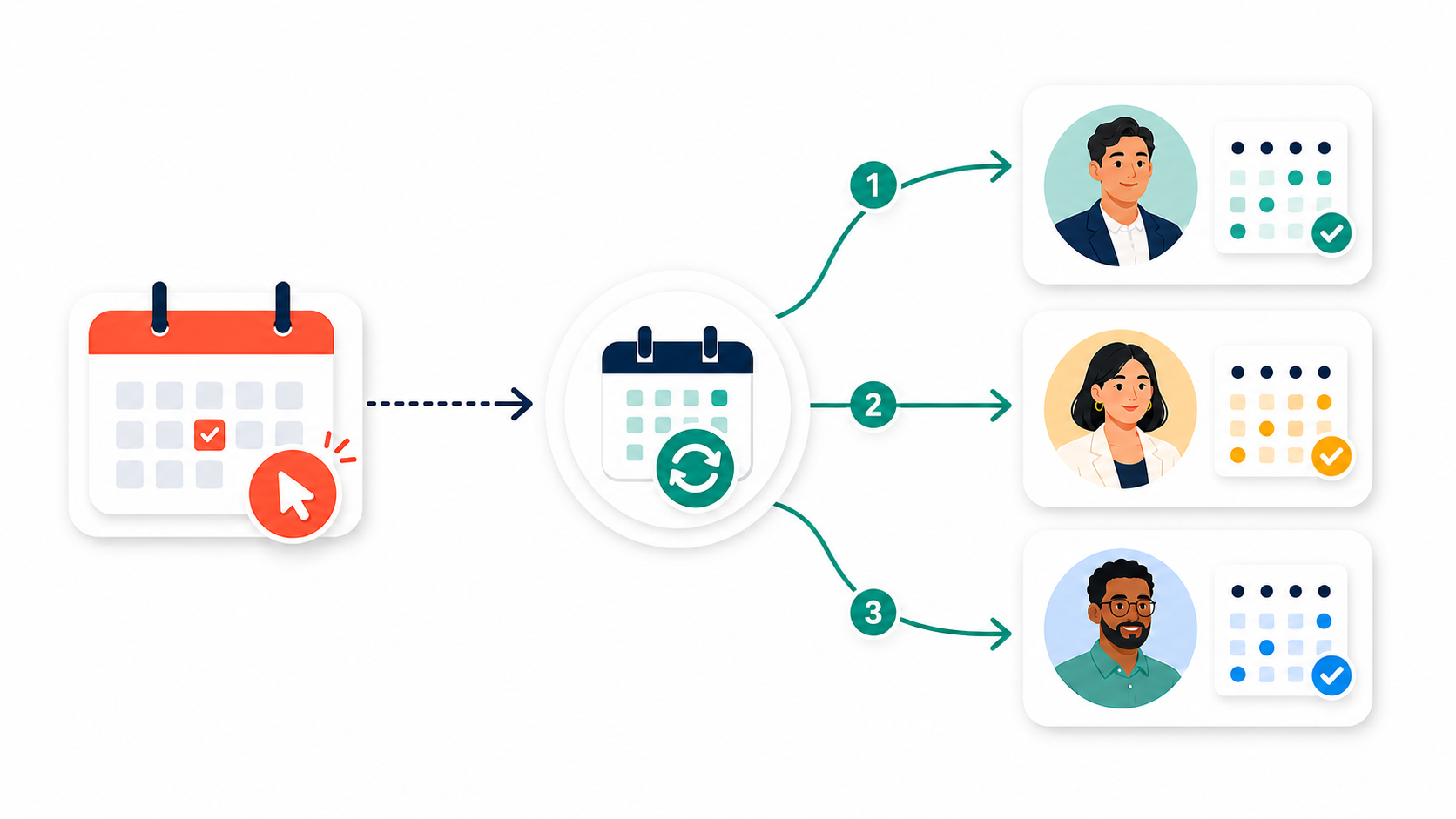
The operating problem
Why round robin scheduling matters for growing teams
When every inbound meeting lands on the same calendar, response times slow down, one person gets overloaded, and the rest of the team misses opportunities they could have handled. Shared inboxes and manual assignment do not scale once booking volume picks up.
Round robin scheduling gives clients one booking page while calendr.so distributes confirmed meetings across the right team members. That keeps lead routing and client booking workflows moving, with the same availability management rules your team already uses to protect calendars.
How it works
One booking page, fair distribution across the team
calendr.so round robin booking pages show clients the times your team can take the meeting, then assign the booking to the next available person included on the page.
Share one team booking page
Give prospects and clients one link instead of asking them to choose between individual calendars.
Rotate bookings automatically
New meetings are distributed across team members in rotation, so demand is shared more fairly over time.
Respect real availability
Round robin works with connected calendars and availability settings, so bookings only land on people who are free.
Remove manual assignment
Stop routing every inbound meeting by hand in a shared inbox or Slack thread.
Use cases
Where round robin scheduling keeps inbound meetings moving
Sales and inbound demos
Sales teams use round robin to route discovery calls and demo requests across SDRs and AEs, especially when paired with booking forms for qualification before the meeting is confirmed.
Customer success onboarding
Customer success teams distribute onboarding and check-in calls as the team grows, so new clients reach an available CS manager without waiting on one shared calendar.
Advisory and seasonal client work
Appointment scheduling for accountants and other client-facing firms use round robin to spread review and consultation bookings across available staff during busy periods.
Works with calendr.so
Round robin scheduling fits alongside the rest of the scheduling workflow
Use multi-host booking when a specific group must attend the same meeting, and round robin when any available team member can take the booking. Pair round robin pages with embeddable booking when website visitors should reach the next available person directly from a service or pricing page.
Admins can roll out consistent meeting types through team management, then use round robin to distribute demand once those pages are live. When someone leaves the rotation or is unavailable, fallback scheduling options help keep the booking flow working instead of breaking the client journey.
See how round robin fits with other confirmed capabilities on the features overview. For teams that need tighter lead times or calendar protection on shared booking pages, availability management keeps the same rules in place while round robin handles assignment.
Frequently asked questions
- What is round robin scheduling in calendr.so?
- Round robin scheduling distributes new bookings across the team members included on a booking page. When a client or prospect books, calendr.so assigns the meeting to the next available person in the rotation instead of leaving one calendar to carry every request.
- How is round robin different from multi-host booking?
- Round robin is for meetings where any available team member can take the booking and the goal is fair distribution. Multi-host booking is for meetings where a specific set of people must all be available at the same time.
- Can round robin only assign to people who are free?
- Yes. Round robin scheduling works with connected calendars and availability settings, so bookings are routed to team members who are actually available for the selected time.
- When should teams use round robin scheduling?
- Use round robin when inbound meetings should be shared across a team, such as discovery calls, demo requests, onboarding calls, support meetings, or advisory appointments where any qualified person can take the booking.
- Does round robin scheduling work with booking forms?
- Yes. Booking forms can collect qualification or intake details on the same round robin page, so the assigned host receives context before the meeting starts.
- What happens when someone on the round robin page is unavailable?
- If the assigned person cannot take the booking, fallback scheduling options can help keep the client moving instead of leaving them at a dead end. Availability rules and connected calendars also help prevent bookings from landing on people who are not free.
Distribute inbound meetings across your team automatically
Create round robin booking pages that route new meetings to available team members, so lead routing and client booking workflows keep moving without manual assignment.
No credit card required